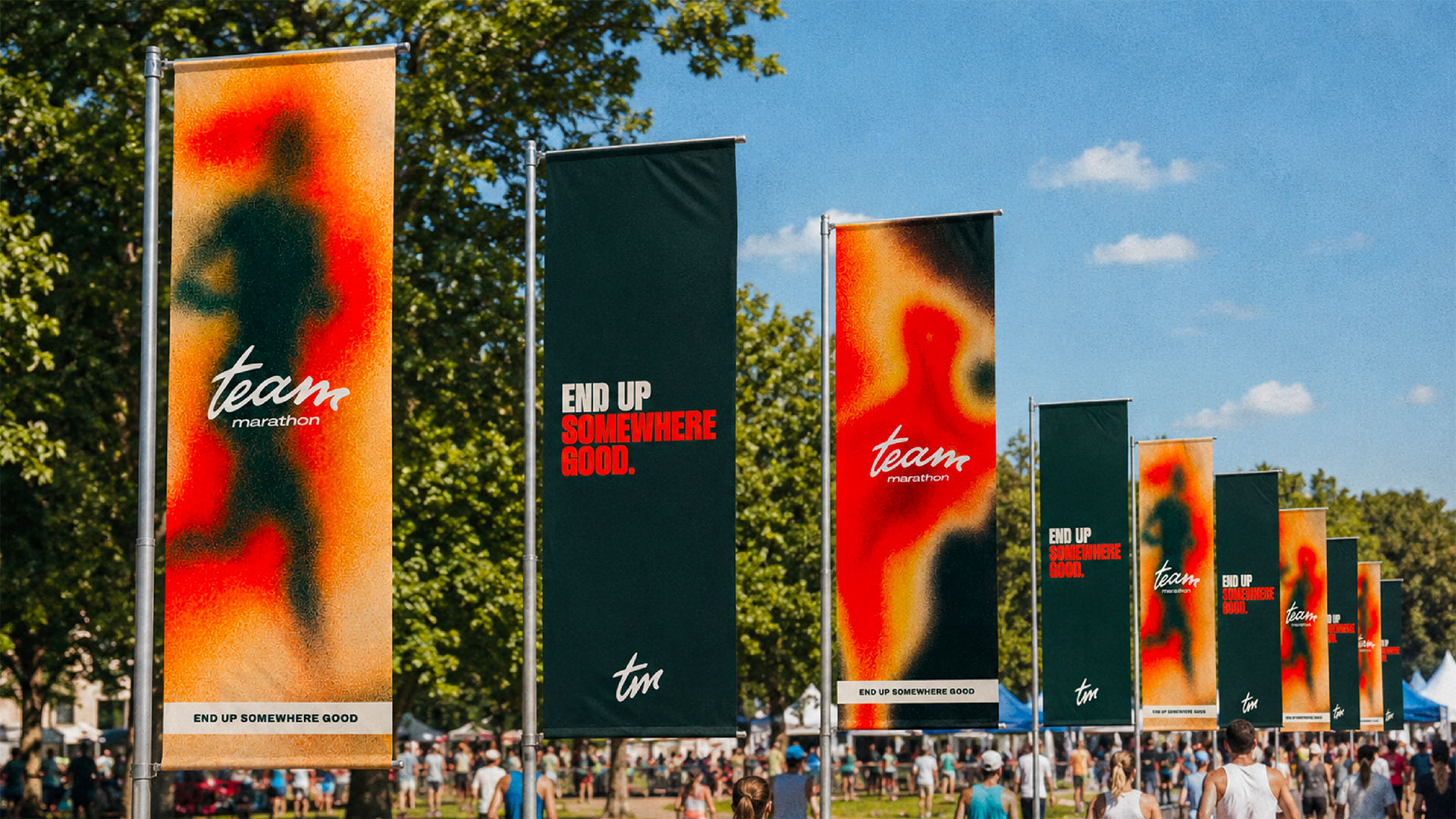
An event does not begin when somebody reaches the venue. It begins with the first campaign impression, continues through registration and preparation, and shapes every decision they make on the day.
Each interaction may be produced by a different team. Marketing manages the campaign, operations plans the site, a registration platform sends practical emails and suppliers produce the physical environment. The participant experiences all of it as one event.
Mapping that complete journey helps organisers find gaps, reduce uncertainty and create a more recognisable experience from first impression to final follow-up.
Start with the promise
Every event makes a promise before asking somebody to enter. It might offer competition, community, discovery, entertainment or a particular sense of place.
The campaign establishes that expectation through its message, imagery and tone. The rest of the journey needs to support it. A bold, inclusive campaign can quickly lose credibility if registration feels confusing or the arrival experience is difficult to navigate.
Define the central promise in simple terms, then use it as a test. Does each stage help the participant understand what the event is, what they need to do and how they should feel?
Consistency is not only visual. It comes from keeping the experience aligned with the idea that persuaded someone to take part.
Map the journey from the participant’s point of view
Internal plans are often organised by department or delivery deadline. A participant journey should instead follow the order in which somebody encounters the event.
A useful first map might include:
- Discovery and consideration
- Registration or ticket purchase
- Confirmation and preparation
- Travel and arrival
- Check-in, collection or entry
- Participation and live information
- Finish, recovery or departure
- Results, sharing and future engagement
For each stage, record what the participant is trying to achieve, what information they need, which channel provides it and what could cause doubt.
This reveals the joins between teams. It may show that language changes between the website and signage, an important instruction arrives too late, or a campaign call to action leads to a registration page that feels like a different organisation.
Account for more than one audience
There is rarely a single journey. First-time participants may need more reassurance than experienced competitors. Spectators, volunteers, partners, staff and accessible-route users will have different arrival points and priorities.
Start with the largest or most important audience, then map the meaningful variations. Avoid creating separate systems where a shared one would work, but do not assume that every person has the same information, mobility or familiarity with the event.
Useful questions include:
- What does this group know already?
- Which decisions are unfamiliar or time-sensitive?
- Where might they feel uncertain?
- Do they need a different route or format?
- Who can help if the planned journey breaks down?
Designing around real needs produces clearer communication than simply adding more information for everyone.
Make each stage feel connected
The visual identity should act as a thread through the journey. Type, colour, imagery, icons and tone can help participants recognise that an email, map, social update and physical sign all belong to the same event.
This does not mean making every asset look identical. A campaign advert and a directional sign have different jobs. The advert needs attention and motivation; the sign needs immediate clarity.
The connection should come from shared principles. Consistent naming, hierarchy and visual cues build confidence while allowing each format to perform properly.
Hackney Moves demonstrates how a broad event identity can connect promotional energy with the live festival environment. Run the Wharf similarly shows how a distinctive event idea can remain recognisable across different participant touchpoints.
Design the moments of uncertainty
The most important parts of a journey are often the moments when somebody pauses and asks, “What happens next?”
These may include:
- Completing registration
- Finding essential pre-event information
- Choosing transport or parking
- Locating the correct entrance
- Knowing where to leave belongings
- Understanding start procedures
- Finding facilities or accessible routes
- Recovering belongings and leaving after the finish
At each point, identify the single most important answer. Put that first and make supporting detail available without allowing it to compete.
Reassurance is useful too. Confirmation messages, repeated destination names and signs that acknowledge progress can tell people they are still moving in the right direction.
Connect digital information with the physical event
Participants often move between channels while travelling. They may open an email, check a map, visit the event website and then look for a physical sign within a few minutes.
Those sources should use the same names, landmarks and hierarchy. If the website refers to “participant check-in” while the venue uses “registration,” people must decide whether they mean the same thing.
Digital information should be easy to use on a phone and available when connectivity is poor. Critical details should not be hidden in one long document or depend entirely on a live app.
Physical signage should continue the same information structure rather than introducing a new one at the venue. For more on that relationship, read Designing an event brand people can actually navigate.
Let the event model shape the journey
The structure of an event changes the communications it needs. A single-site race, a city-wide festival and a multi-venue sports programme create different movement patterns and levels of complexity.
Glasgow 2026, held from 23 July to 2 August, provides a recent example. Ten sports were concentrated across four established venues within an eight-mile corridor as part of a leaner, city-centred Commonwealth Games model.
That compact model did not remove the need for clear journeys. Participants and spectators still needed to understand which venue, entrance, session and route applied to them. For an event organised this way, the identity and information system must respond to the operating model rather than being applied after it.
Plan for change without creating confusion
Live events move. Timings, routes, weather plans and operational details can change close to delivery.
Agree which source holds the latest information, who can approve an update and how it reaches every affected channel. A clear change process prevents an old email, web page or sign from contradicting the current plan.
Templates can help teams communicate updates quickly, but urgency should not weaken clarity. State what has changed, who it affects and what action is required.
The participant should not need to compare several messages to discover which one is correct.
Build emotional moments as well as practical ones
A good journey does more than remove friction. It creates anticipation, energy, achievement and connection.
Arrival, the start, key course moments and the finish each offer opportunities to express the event’s character. Sound, language, environmental graphics, volunteers and sponsor activity can all contribute.
These moments work best when the practical foundation is secure. Celebration feels more powerful when participants already know where to go and what happens next.
The finish is not necessarily the end. Results, photography, thanks and next-event communications extend the experience and give participants material they want to revisit or share.
Review the complete experience
Before opening, walk the main journeys in sequence rather than reviewing each asset separately. Use the channels and approach the venue as a participant would.
Afterwards, combine operational observations with participant feedback. Look for repeated questions, crowded decision points, missed information and stages that felt disconnected. These insights can improve the next event more effectively than judging the campaign or signage in isolation.
A consistent participant journey is not created by adding the logo everywhere. It comes from joining up the promise, information, environment and human support around the needs of the people taking part.
Planning a new event or improving an established one? Talk to us about connecting the campaign and participant experience from the start.